
Cross-Contamination Cleaning Protocols for Medical Labs & Outpatient Clinics
Medical clinics in Ontario follow PIDAC’s Best Practices for Environmental Cleaning, developed by Public Health Ontario in collaboration with the College of Physicians and Surgeons of Ontario. Clinics in British Columbia follow guidance from the BC Centre for Disease Control and the College of Physicians and Surgeons of BC, which adapted the same PIDAC framework for provincial use. Both provinces require zone-based cleaning, hospital-grade disinfectants with a Health Canada Drug Identification Number, defined contact times, and documented auditing, standards most local cleaning companies are not built to meet.
Why General Office Cleaning Falls Short in a Clinical Setting
A janitorial team trained for corporate offices knows how to empty bins, vacuum carpets, and wipe down a boardroom table. None of that training prepares them for the actual risk profile of a medical facility, where an improperly disinfected exam table or a contaminated waiting room chair can facilitate the transmission of pathogens between patients.
Regulatory colleges in both Ontario and British Columbia have made this distinction explicit. Cleaning in a clinical setting isn’t about appearance. It’s about interrupting the chain of infection, and it’s governed by specific, auditable standards.
The Regulatory Framework Behind Clinic Cleaning
Ontario
Ontario clinics operate under guidance from the Provincial Infectious Diseases Advisory Committee, known as PIDAC, which is convened through Public Health Ontario. Its core document, Best Practices for Environmental Cleaning for Prevention and Control of Infections, was developed with input from the College of Physicians and Surgeons of Ontario specifically to address clinical office practice. When a public health inspector visits an Ontario clinic, they’re verifying that the facility has adopted this framework and that staff can demonstrate it in practice, not just that the floors look clean.
British Columbia
British Columbia clinics follow guidance issued by the BC Centre for Disease Control, along with a professional guideline on infection prevention and control published by the College of Physicians and Surgeons of BC. Much of BC’s framework was formally adapted from the same PIDAC standards used in Ontario, giving clinics in both provinces a closely aligned baseline even though the issuing bodies differ. BC clinics are also expected to align cleaning and exposure control practices with WorkSafeBC’s occupational health and safety requirements and, where applicable, guidance from the Provincial Infection Control Network of BC.
The practical takeaway for a clinic owner is the same in either province: cleaning protocols need to be documented, staff-trained, and traceable back to a recognized provincial standard, not left to a generic cleaning checklist.
Understanding Cross-Contamination Risk Zones
Both provincial frameworks classify surfaces and equipment by contact risk, an approach known as Spaulding’s classification, which sorts items into critical, semi-critical, and non-critical categories based on what they contact and how they must be reprocessed.
Cleaning protocols apply a parallel logic to surfaces:
- High-touch surfaces: Exam tables, door handles, light switches, blood pressure cuffs, and shared equipment require intensified disinfection between every patient, not once per day.
- Low-touch surfaces: Walls, floors, and window sills carry lower transmission risk and can follow a standard daily or scheduled cleaning frequency.
Treating a waiting room chair the same as an exam table, or an exam table the same as a hallway floor, is exactly the kind of generic approach that fails a compliance review.
Waiting Room Protocols
The waiting room is often the highest-traffic, highest-risk area in a clinic, since it holds the most people in the smallest space for the longest stretches of time. Effective protocols typically include:
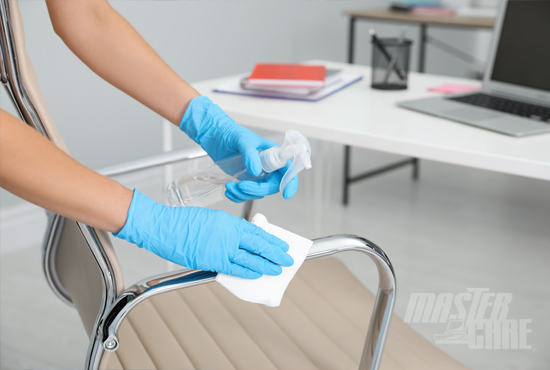
- Disinfection of chair arms, tabletops, and door handles multiple times per day, not just at opening and closing
- Removal of high-touch shared items, such as magazines or toys, that can’t be reliably disinfected between uses
- Hand sanitizer stations at entry points and check-in counters
- Scheduled disinfection of reception counters and pens or clipboards shared between patients
Examination and Clinical Area Protocols
Examination rooms and lab spaces require a stricter standard, built around the between-patient turnover.
- Between-patient disinfection: Exam tables, countertops, and any equipment touched during the visit must be disinfected before the next patient enters, using a product with a proven contact time appropriate to the pathogens of concern.
- Product selection: Disinfectants require a Drug Identification Number from Health Canada and documented effectiveness against pathogens such as C. difficile, MRSA, and norovirus. Contact time, meaning how long the surface must remain visibly wet, has to match the manufacturer’s label instructions or the disinfectant doesn’t do its job.
- Color-coded equipment systems: Using dedicated, color-coded microfiber cloths and mop heads for different zones prevents cross-contamination between, for example, a washroom and an exam room.
- Biohazardous waste handling: Sharps and materials contacted by blood or bodily fluids must be segregated into labelled biohazard containers and handled under WHMIS-compliant procedures, separate from general waste.
Auditing and Verification
Neither provincial framework treats compliance as a one-time setup. Clinics are expected to maintain ongoing verification that cleaning protocols are actually being followed, not just documented on paper. Common methods include:
- ATP testing: Swab-based testing that measures organic residue on a surface after cleaning, giving an objective pass or fail result rather than a visual judgment call
- Visual audits: Scheduled walkthroughs comparing actual cleaning practices against the clinic’s written protocol
- Staff training records: Documentation that cleaning staff have been trained specifically on the clinic’s protocol, not just general janitorial procedures
This is also the layer that most differentiates a specialized medical cleaning provider from a general commercial cleaner. Verification isn’t an add-on; it’s what makes a protocol defensible during an inspection or a college practice visit.
Frequently Asked Questions
Work With a Provider Who Knows the Standard
General commercial cleaning experience doesn’t translate to a clinical environment. Master Care’s medical facility cleaning teams are trained specifically on Ontario and BC infection prevention frameworks, from zone-based disinfection to biohazard handling and audit-ready documentation.
Request a Free On-Site Assessment
Discover how a customized Master Care maintenance plan can simplify your facility management. A local associate will visit your facility to provide a customized cleaning plan and service quote.